Introduction
A showroom is more than a place to display products.
It is a space where brands communicate value, quality and identity.
Whether it is a furniture showroom, automotive showroom, luxury boutique, technology experience center or commercial product display space, lighting plays a critical role in shaping how customers perceive products.
Unfortunately, many showrooms focus heavily on interior design while overlooking one of the most influential factors:
Lighting strategy.
Successful showroom lighting follows many of the same principles used in professional retail lighting design.
Even premium products can lose impact when lighting is poorly planned.
The right showroom lighting should:
- Highlight products
- Create visual hierarchy
- Improve customer experience
- Enhance brand perception
- Support sales conversations
The question is:
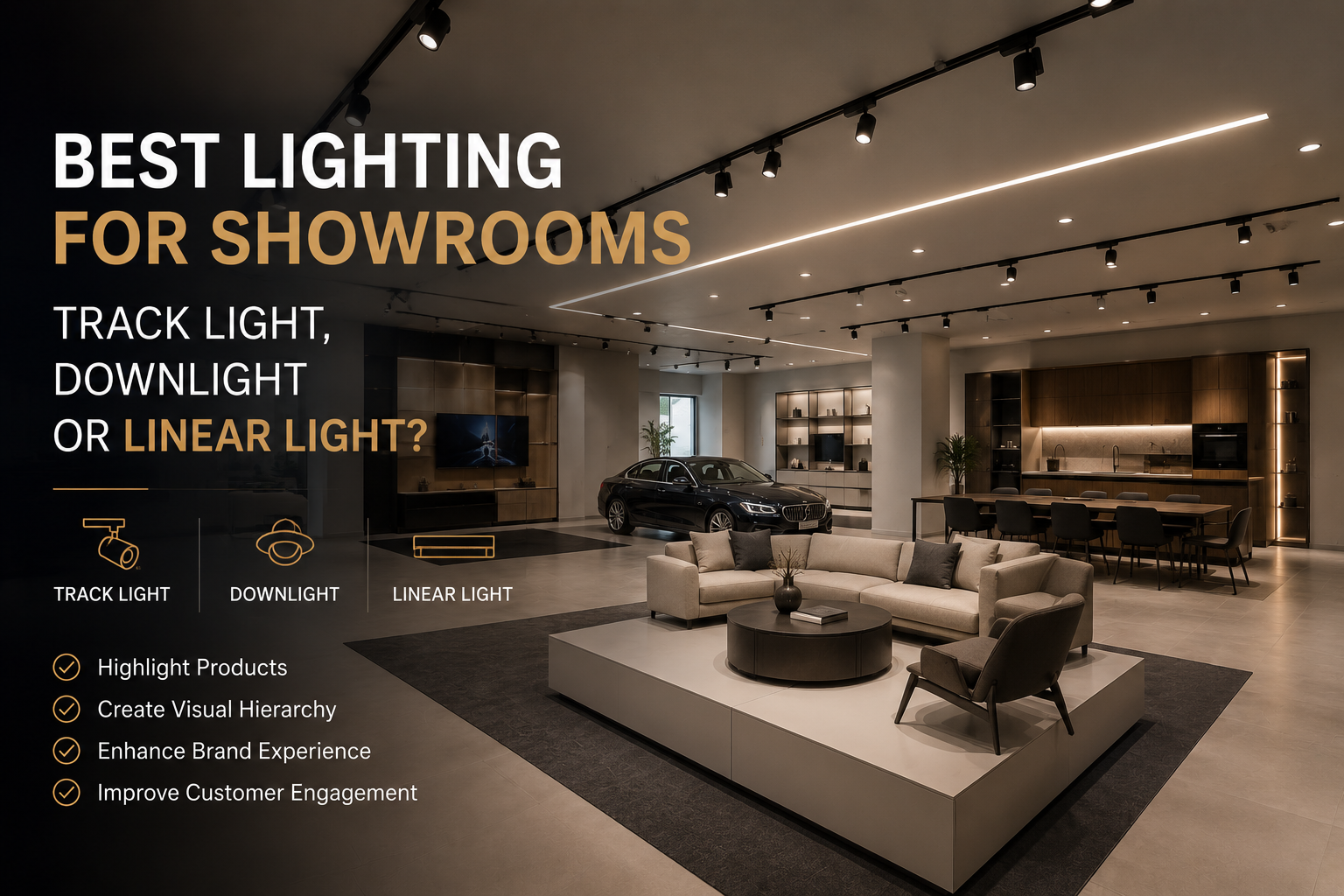
Should you use track lights, downlights or linear lighting?
The answer is not always straightforward.
Each lighting system serves a different purpose.
Understanding these differences is essential for creating a successful showroom environment.
Why Lighting Matters in Showrooms
Unlike retail stores, showrooms are often designed to showcase fewer products in greater detail.
Customers spend more time evaluating products and comparing options.
This means lighting must do more than provide visibility.
It must help create:
- Focus
- Contrast
- Comfort
- Atmosphere
Good showroom lighting helps customers understand product quality and design details.
Poor lighting can make products appear flat, dull and less attractive.
Track Lighting: The Most Flexible Showroom Solution
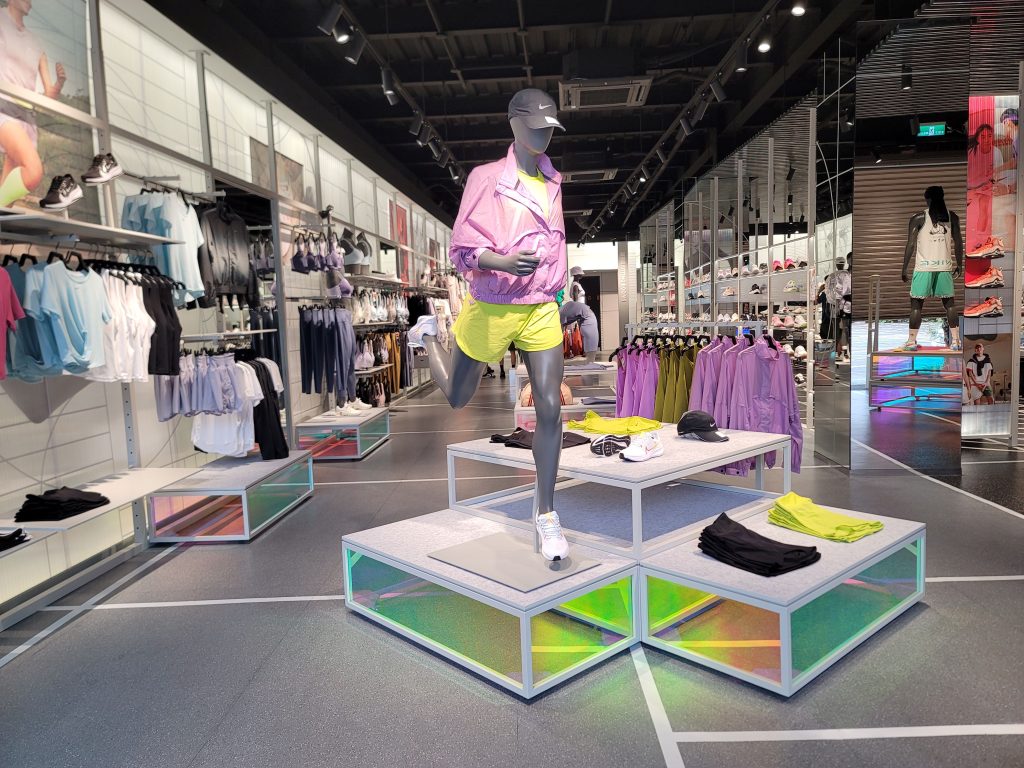
Track lighting is one of the most popular lighting systems used in modern showrooms.
The biggest advantage is flexibility.
Products and displays change regularly.
Track lights can be repositioned and adjusted without major modifications to the ceiling.
Advantages:
✔ Adjustable direction
✔ Easy layout changes
✔ Excellent product highlighting
✔ Ideal for accent lighting
Track lighting works particularly well in:
- Furniture showrooms
- Fashion showrooms
- Automotive displays
- Electronics showrooms
- Retail experience centers
When designers need precise control over customer attention, track lighting is usually the preferred choice.
Downlights: Creating a Clean and Professional Environment
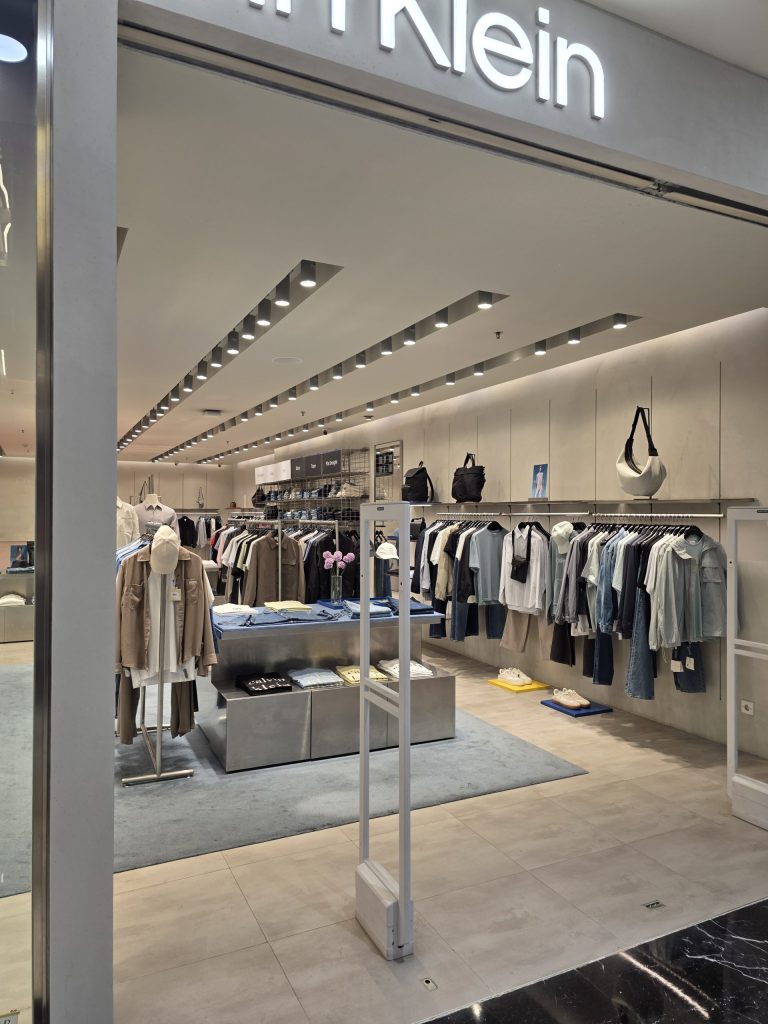
Downlights provide clean and comfortable general illumination.
They are often used to create a refined architectural appearance.
Advantages:
✔ Minimal visual impact
✔ Clean ceiling design
✔ Comfortable ambient lighting
✔ Suitable for large spaces
Downlights are ideal for:
- Reception areas
- Walkways
- Meeting spaces
- General showroom illumination
However, relying only on downlights can make products feel less prominent.
For this reason, downlights are usually combined with accent lighting systems.
Linear Lighting: Modern and Architectural
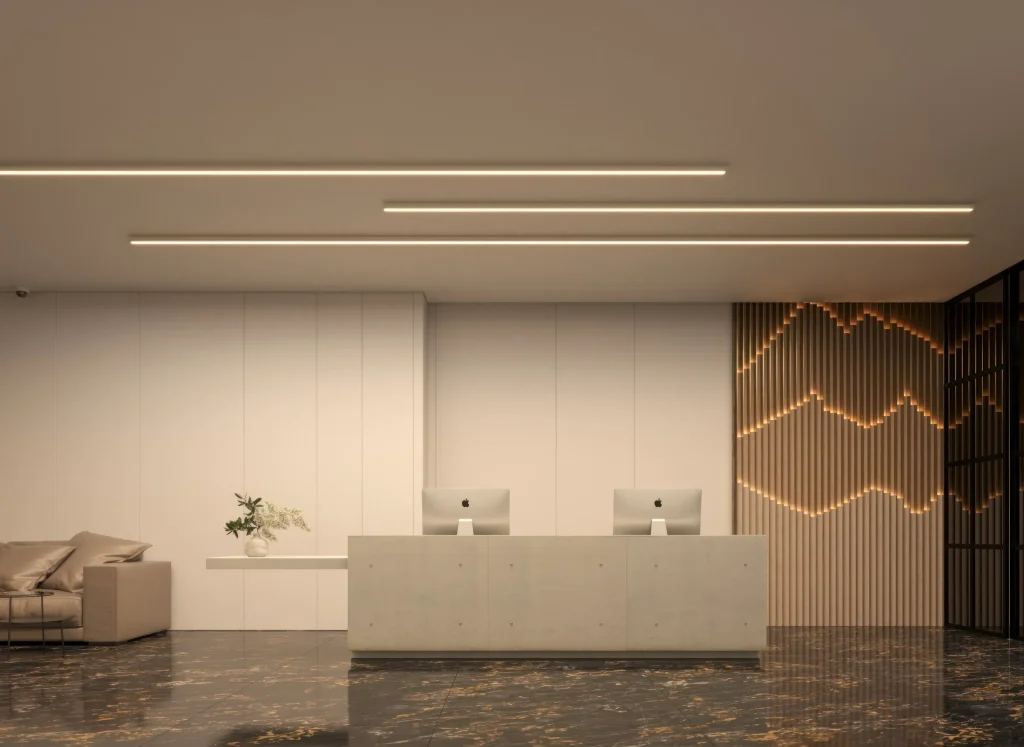
Linear lighting has become increasingly popular in modern commercial environments.
It creates strong visual lines and enhances spatial perception.
Advantages:
✔ Modern appearance
✔ Uniform illumination
✔ Architectural integration
✔ Strong visual guidance
Linear lighting is commonly used in:
- Technology showrooms
- Automotive showrooms
- Office experience centers
- Contemporary retail environments
While linear lighting contributes significantly to aesthetics, it is generally not sufficient as the primary product highlighting system.
Which Lighting System Creates the Best Product Focus?
When product presentation is the primary goal, track lighting usually performs best.
Why?
Similar to retail environments, product-focused lighting is essential for showroom applications.
Because it allows:
- Beam angle control
- Directional lighting
- Product emphasis
- Flexible display adjustments
This is especially important in showrooms where products frequently change.
The ability to adjust lighting quickly provides long-term operational advantages.
The Best Showroom Lighting Strategy
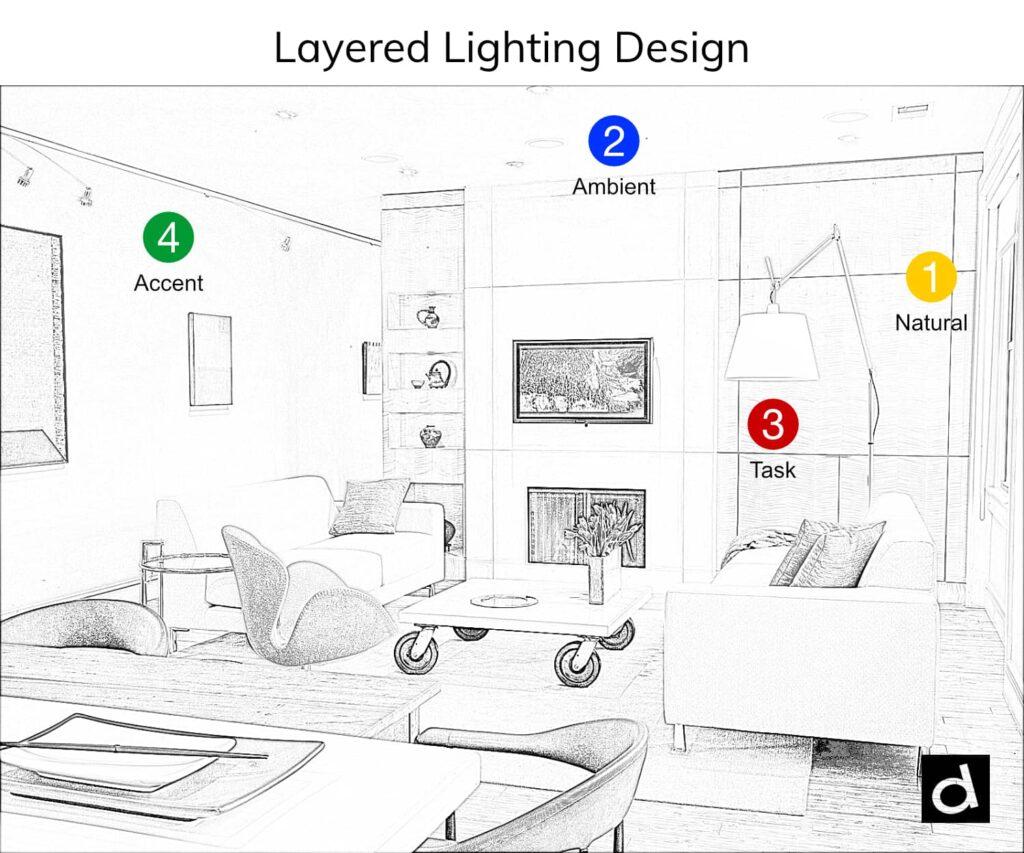
Rather than choosing only one lighting system, professional showroom projects usually combine all three.
Layer 1: Downlights
Provide general illumination.
Layer 2: Linear Lighting
Create spatial structure and architectural identity.
Layer 3: Track Lighting
Highlight products and create visual hierarchy.
This layered approach delivers:
✔ Better customer experience
✔ Stronger product visibility
✔ Improved showroom atmosphere
✔ More professional presentation
Many successful retail and showroom projects use this layered lighting strategy to improve customer engagement and product visibility.
Common Showroom Lighting Mistakes
Mistake 1
Using only general lighting.
Mistake 2
Ignoring beam angle selection.
Mistake 3
Over-lighting the entire space.
Mistake 4
Creating glare near product displays.
Mistake 5
Treating lighting as decoration instead of a sales tool.
How AXORA Supports Showroom Lighting Projects
At AXORA Lighting, we focus on project-oriented commercial lighting solutions designed for real-world applications. We support retail spaces, showrooms, offices and commercial developments with scalable lighting systems and optical precision. Our solutions emphasize beam angle control, visual comfort, optical consistency and long-term project reliability.
We help designers and contractors build showroom environments that not only look impressive but also improve product presentation and customer engagement.
Conclusion
There is no single best lighting system for every showroom.
Track lights, downlights and linear lighting each play a different role.
The most successful showroom projects combine all three to create:
- Product focus
- Visual hierarchy
- Customer comfort
- Architectural appeal
When lighting is planned strategically, a showroom becomes more than a display space.
It becomes a powerful sales and branding environment.
CTA
Looking for Professional Showroom Lighting Solutions?
AXORA Lighting supports:
✅ Furniture Showrooms
✅ Retail Showrooms
✅ Automotive Showrooms
✅ Technology Experience Centers
Contact us for:
✔ Product Recommendation
✔ Lighting Consultation
✔ Datasheet Download
✔ Commercial Quotation