Introduction
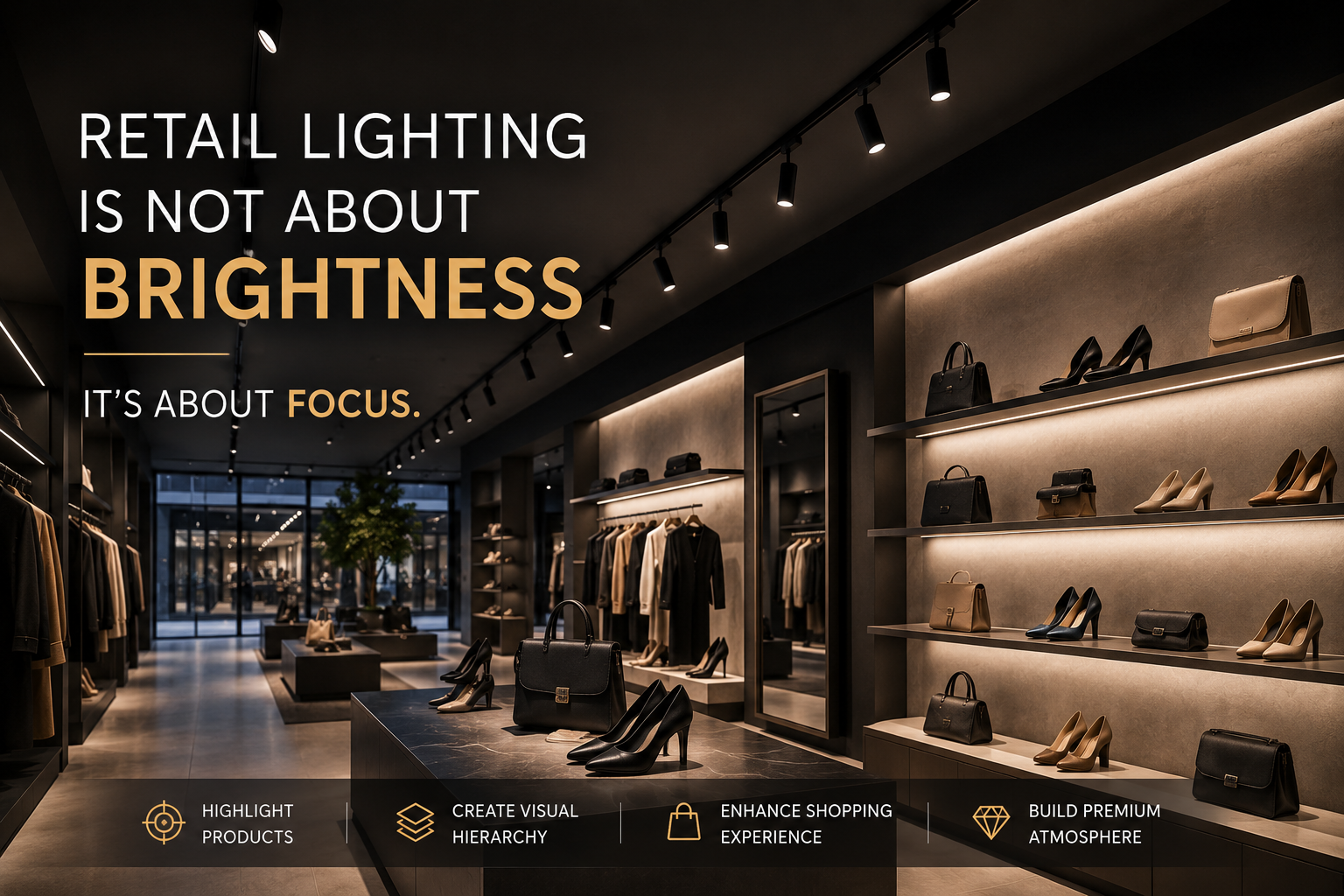
In retail environments, lighting is not only about visibility — it directly affects how customers perceive products, navigate the space and experience the brand.
Many retail stores invest heavily in interior design and product display, yet still struggle to create a premium atmosphere. In most cases, the issue is not the products themselves, but the lighting strategy behind them.
Poor beam control, low CRI and flat general lighting can make even luxury products appear ordinary.
Professional retail lighting should help:
- Highlight key products
- Create visual hierarchy
- Improve customer focus
- Enhance material texture and colors
- Build a stronger shopping experience
This is why track lighting has become one of the most widely used lighting systems in modern retail stores, boutiques and showrooms.
In this guide, we will explain how to choose the right track lights for retail environments based on:
- Beam angle
- CRI
- Wattage
- Optical control
- Lighting application strategy
Why Track Lighting Is Popular in Retail Stores
Track lighting is widely used in retail projects because it offers flexibility, precision and visual control.
Unlike fixed lighting systems, track lights can be adjusted and repositioned easily when store layouts or product displays change.
This flexibility is especially important for:
- Fashion stores
- Boutiques
- Cosmetics stores
- Jewelry stores
- Shopping malls
- Brand showrooms
Track lighting allows designers to:
- Direct attention toward specific products
- Create contrast and depth
- Build layered lighting effects
- Adapt lighting layouts for seasonal displays
Another important advantage is optical precision.
Retail spaces require more than brightness. They require controlled lighting that guides customer attention naturally throughout the store.
Well-designed track lighting helps products stand out without making the space feel harsh or uncomfortable.
Understanding Beam Angle in Retail Lighting
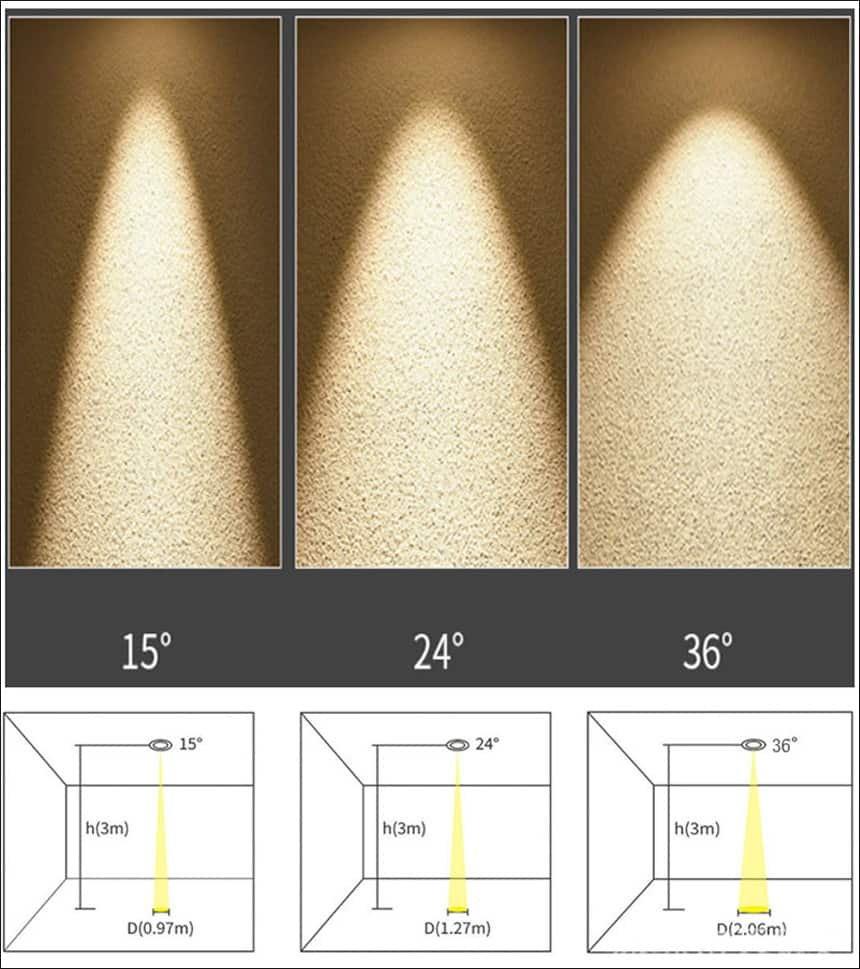
Beam angle is one of the most important factors in retail lighting design.
It determines how concentrated or spread the light output will be.
Different beam angles create completely different visual effects.
Narrow Beam Angle (10°–24°)
Narrow beam lighting creates strong focus and dramatic contrast.
It is commonly used for:
- Luxury products
- Jewelry
- Watches
- Cosmetics
- Display shelves
- Window displays
A narrow beam helps create a premium atmosphere by isolating key products visually.
This technique is often used in luxury retail stores where product presentation is extremely important.
Best for:
- Accent lighting
- Premium display areas
- High-value products
Medium Beam Angle (24°–40°)
Medium beam angles are the most common choice for retail applications.
They provide balanced illumination while still maintaining product focus.
Suitable for:
- Fashion retail
- General boutique lighting
- Footwear stores
- Brand showrooms
This beam range creates comfortable visual hierarchy without excessive contrast.
Best for:
- Main retail display areas
- Flexible merchandising zones
- General retail accent lighting
Wide Beam Angle (40°+)
Wide beam angles provide broader light distribution.
They are usually used for:
- Ambient lighting
- General circulation areas
- Open retail spaces
However, relying only on wide beam lighting often makes retail spaces appear flat and less engaging.
For this reason, most successful retail lighting projects combine:
- Wide beam ambient lighting
- Medium or narrow beam accent lighting
This creates a layered lighting effect that feels more dynamic and professional.
Why CRI Matters in Retail Lighting
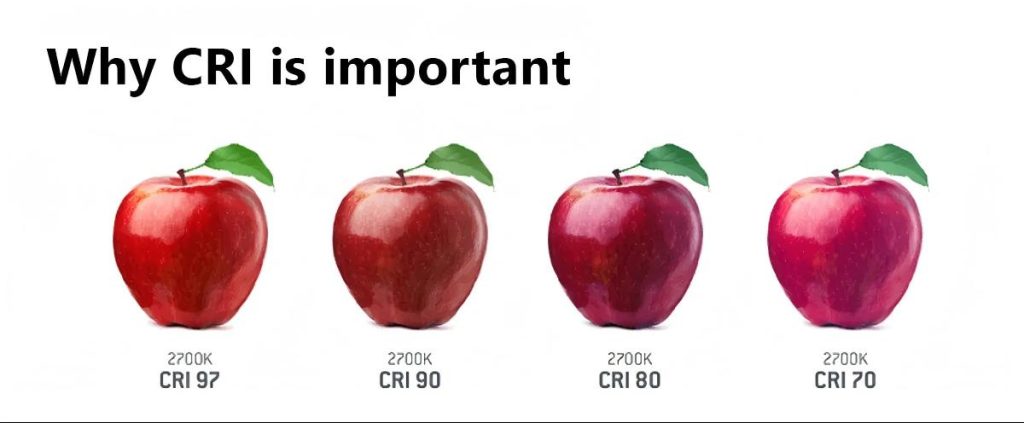
CRI (Color Rendering Index) measures how accurately a light source reveals colors compared to natural light.
In retail environments, color accuracy is critical.
Low CRI lighting can make:
- Clothing look dull
- Skin tones appear unnatural
- Product textures disappear
- Luxury products lose visual impact
High CRI lighting helps customers see products more clearly and confidently.
For retail and showroom projects, CRI90+ is generally recommended.
This is especially important for:
- Fashion stores
- Cosmetics
- Jewelry
- Furniture showrooms
- Luxury retail
High CRI lighting improves:
- Product presentation
- Material texture visibility
- Brand perception
- Customer experience
In many premium retail environments, lighting quality directly influences purchasing behavior.
Wattage Does NOT Mean Better Retail Lighting
One common misconception in retail lighting is that higher wattage automatically means better lighting.
In reality, retail lighting quality depends far more on:
- Optical control
- Beam precision
- Glare management
- Layered lighting design
A store with uncontrolled high-output lighting may feel:
- Harsh
- Flat
- Uncomfortable
- Visually chaotic
Meanwhile, a well-designed retail lighting system using moderate wattage with proper beam control can create a much more premium environment.
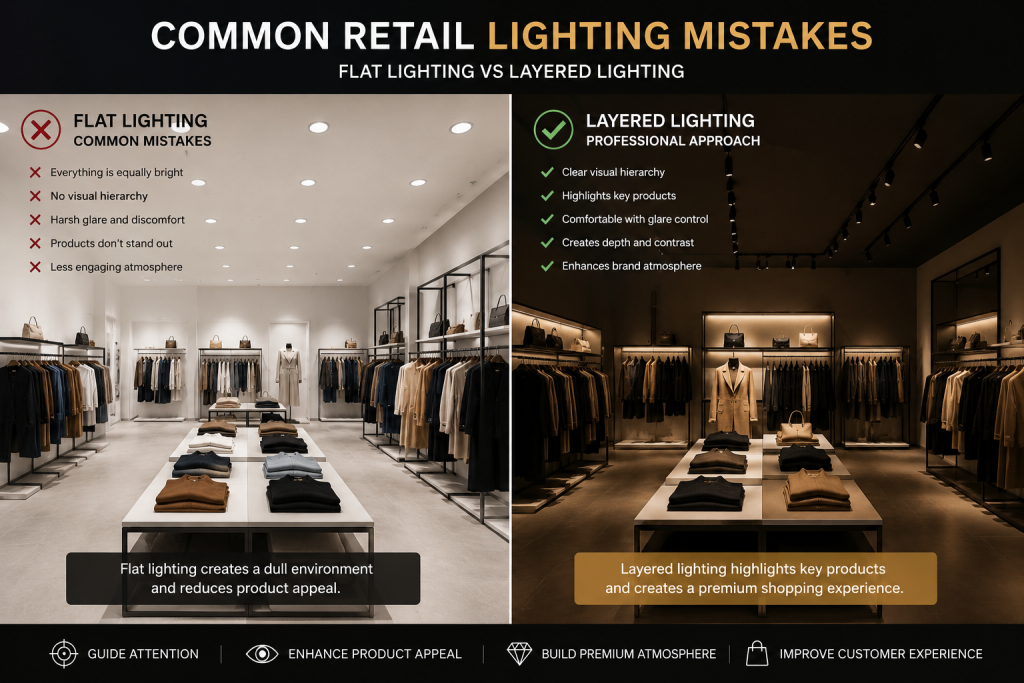
Good retail lighting is not about making everything equally bright.
It is about guiding attention strategically.
This is why luxury stores often appear visually comfortable even though their lighting is highly focused and carefully controlled.
Common Retail Lighting Mistakes
Mistake 1: Using Only General Lighting
Flat lighting makes products blend into the background.
Without accent lighting, stores lose visual hierarchy and focus.
Mistake 2: Wrong Beam Angle Selection
Beam angles that are too wide reduce product contrast.
Beam angles that are too narrow may create excessive hotspots.
Proper beam selection depends on:
- Ceiling height
- Product size
- Display distance
- Store layout
Mistake 3: Ignoring Glare Control
Poor glare management creates visual discomfort and reduces customer experience.
In modern retail projects, anti-glare lighting has become increasingly important.
Deep recessed optics and proper shielding help improve visual comfort significantly.
Mistake 4: Overlighting the Entire Space
Too much brightness can reduce atmosphere and product focus.
Successful retail lighting uses contrast strategically instead of maximizing brightness everywhere.
Recommended Retail Lighting Strategy
Professional retail lighting usually combines multiple lighting layers.
1. Ambient Lighting
Provides overall brightness and circulation lighting.
Commonly achieved using:
- Downlights
- Linear lighting
- Wide beam track lights
2. Accent Lighting
Highlights products and creates visual focus.
Commonly achieved using:
- Adjustable track spotlights
- Narrow beam spotlights
- Directional lighting
3. Display Lighting
Used for shelves, cabinets and feature displays.
This layer helps create premium presentation and stronger product visibility.
When these layers work together properly, the store feels:
- More professional
- More comfortable
- More premium
- More visually engaging
How AXORA Supports Retail Lighting Projects
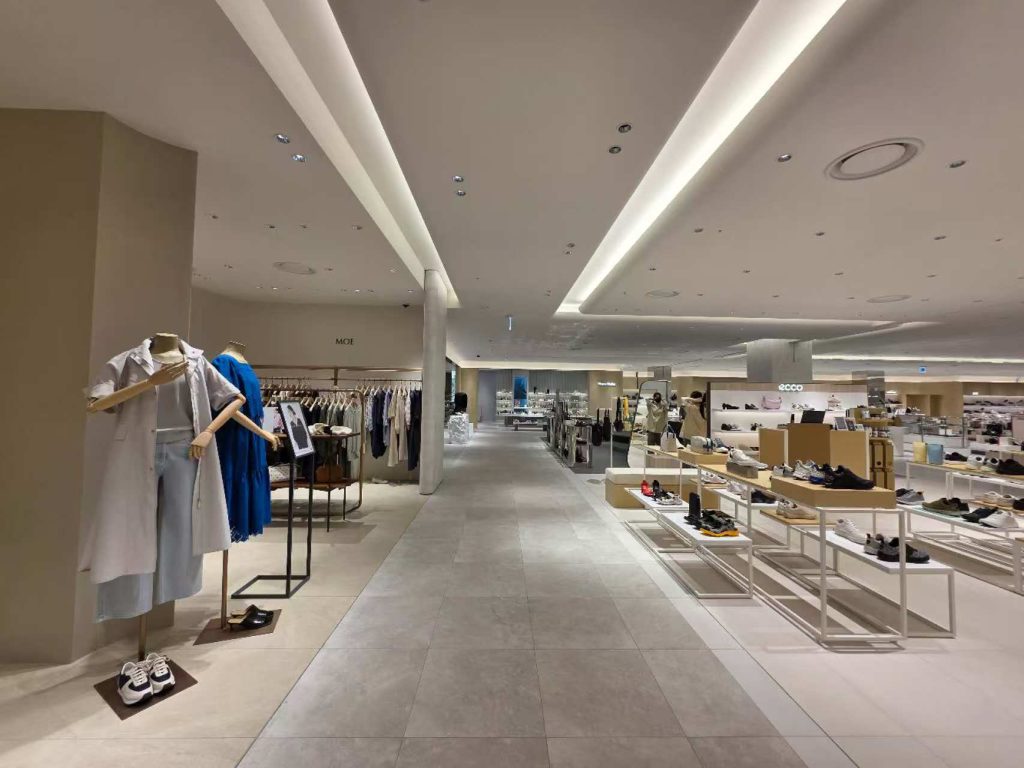
At AXORA Lighting, we focus on project-oriented commercial lighting solutions for retail, showroom and hospitality environments.
Rather than simply supplying fixtures, we help create structured lighting systems designed for real commercial applications.
Our retail lighting solutions emphasize:
- Optical consistency
- Precise beam control
- High CRI performance
- Anti-glare visual comfort
- Stable project supply capability
We support:
- Shopping malls
- Brand boutiques
- Fashion stores
- Commercial showrooms
- Retail chain projects
With scalable production capability and project-based support, AXORA helps designers and contractors maintain lighting consistency across multiple project phases.
Recommended Lighting Products for Retail Projects
For retail lighting applications, commonly recommended solutions include:
Track Lighting
Flexible and adjustable for changing retail layouts.
Anti-Glare Downlights
Ideal for comfortable ambient lighting.
Adjustable Spotlights
Suitable for product highlighting and visual hierarchy.
Linear Lighting Systems
Used for circulation areas and modern retail interiors.
Combining these lighting systems helps create a more professional and layered retail environment.
Conclusion
Retail lighting is not simply about illuminating a space.
It is about directing attention, enhancing products and shaping customer experience.
The right combination of:
- Beam angle
- CRI
- Optical control
- Lighting hierarchy
can dramatically improve how customers perceive a retail environment.
Well-designed track lighting helps create:
- Stronger product focus
- Better visual comfort
- More premium atmosphere
- Improved shopping experience
As retail environments continue evolving, professional lighting design becomes increasingly important for both brand image and commercial performance.
CTA Section
Looking for Professional Retail Lighting Solutions?
AXORA Lighting supports:
- Retail stores
- Shopping malls
- Brand boutiques
- Commercial showrooms
- Multi-store retail projects
Contact us for:
✅ Product Recommendation
✅ Retail Lighting Consultation
✅ Datasheet Download
✅ Commercial Quotation