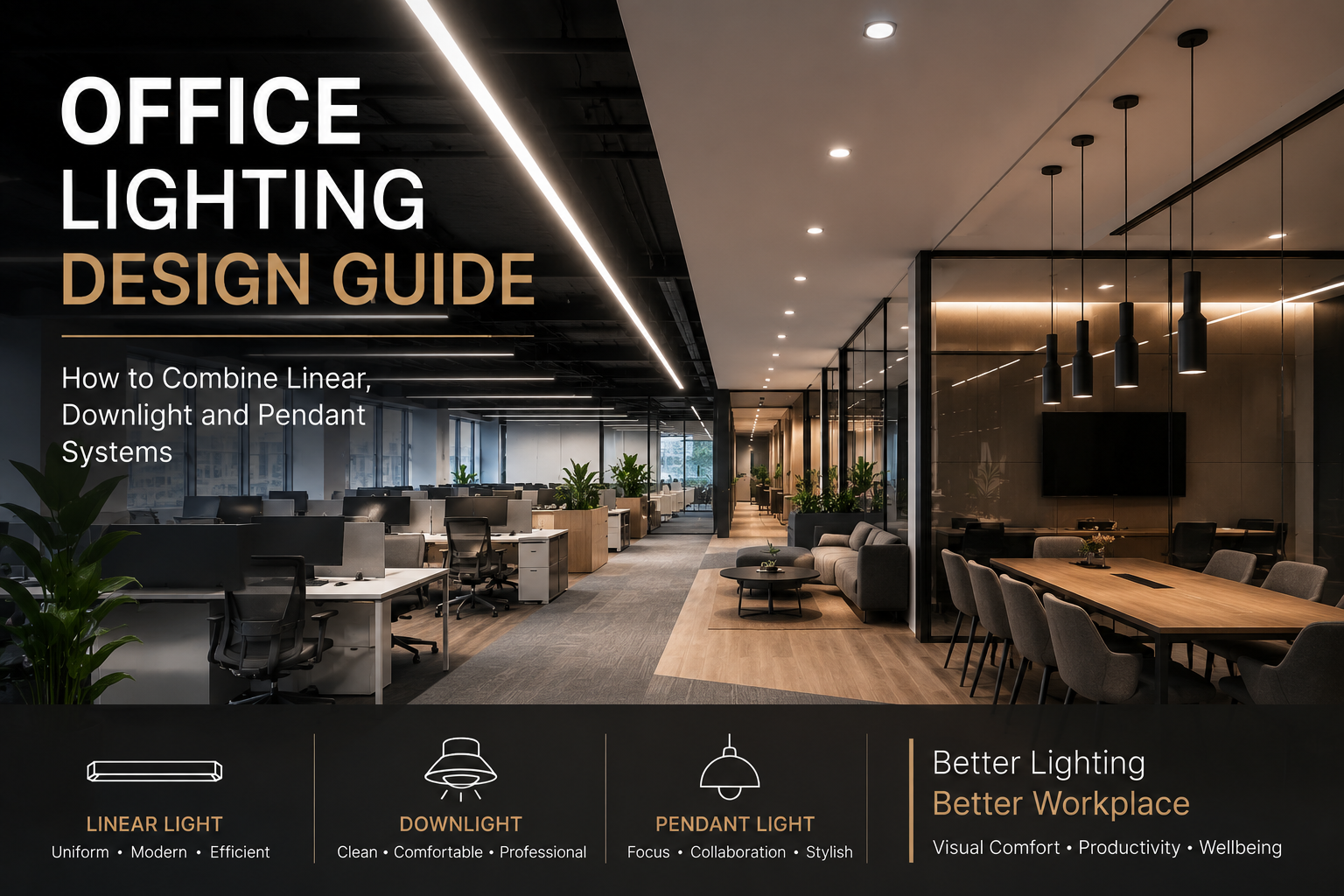
Introduction
Office lighting has evolved significantly over the past decade.
Modern workplaces are no longer designed solely for functionality. They are expected to support employee wellbeing, productivity, collaboration and brand identity.
While furniture, layout and technology often receive significant attention, lighting remains one of the most influential factors in workplace performance.
Poor office lighting can lead to:
- Eye strain
- Visual fatigue
- Reduced concentration
- Employee discomfort
By contrast, a well-planned lighting strategy can improve workplace experience while creating a more professional and productive environment.
The question is:
What is the best way to combine linear lighting, downlights and pendant systems in modern office projects?
This guide explores the role of each lighting system and explains how they can work together to create effective office lighting solutions.
Why Office Lighting Matters
Lighting directly affects how employees feel and perform throughout the day.
A successful office lighting design should provide:
- Visual comfort
- Consistent illumination
- Reduced glare
- Comfortable contrast
- Energy efficiency
The goal is not simply to make a space brighter.
The goal is to create an environment where people can work comfortably for extended periods.
The Role of Linear Lighting in Offices
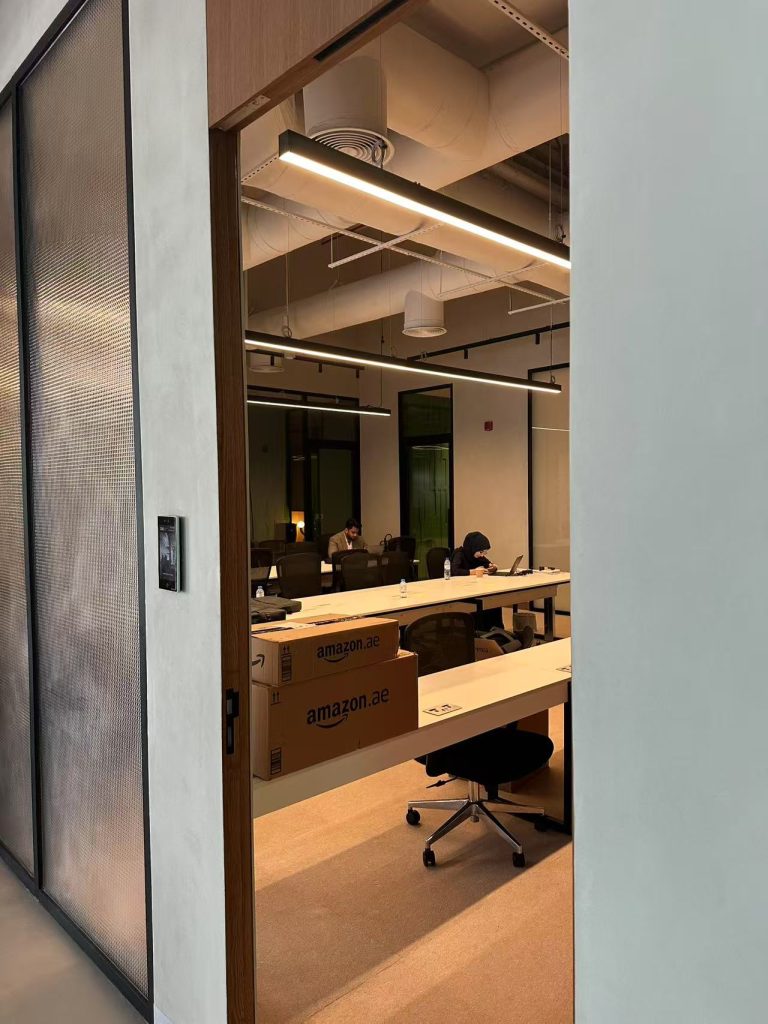
Linear lighting has become one of the most popular lighting solutions in modern workplaces.
Its clean appearance and uniform illumination make it ideal for office environments.
Benefits include:
✔ Modern architectural appearance
✔ Uniform light distribution
✔ Easy integration into ceilings
✔ Suitable for open-plan offices
Common applications:
- Open workspaces
- Collaborative areas
- Workstations
- Circulation zones
Linear lighting often serves as the foundation of a modern office lighting strategy.
Why Downlights Are Still Important
Despite the growing popularity of linear systems, downlights continue to play an important role in commercial office projects.
Benefits include:
✔ Clean ceiling aesthetics
✔ Flexible placement
✔ Comfortable ambient lighting
✔ Architectural integration
Common applications:
- Reception areas
- Corridors
- Meeting rooms
- Executive offices
Downlights help create balanced ambient lighting while maintaining a clean and professional ceiling design.
How Pendant Lighting Enhances Workplace Design
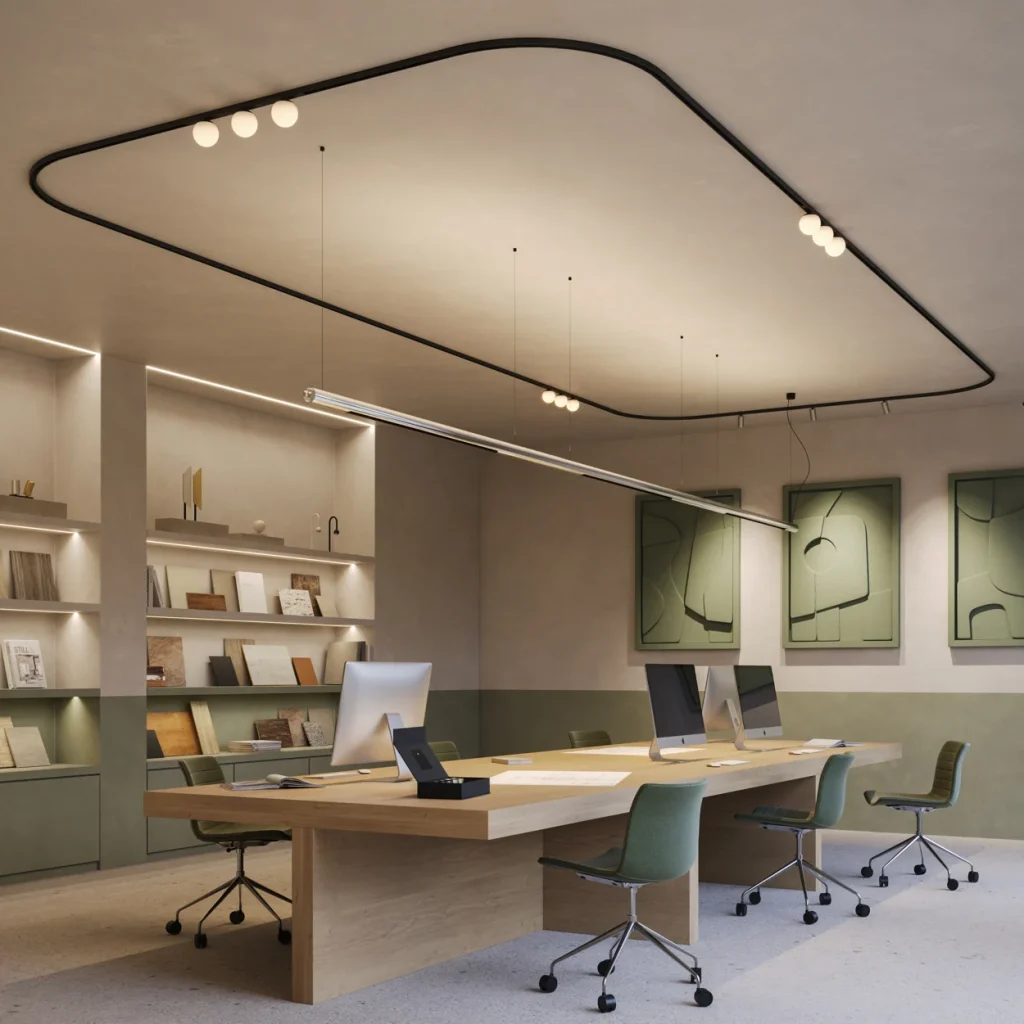
Pendant lighting introduces a different visual layer to office spaces.
Rather than focusing solely on illumination, pendant systems contribute to spatial identity and workplace atmosphere.
Benefits include:
✔ Visual interest
✔ Human-scale lighting
✔ Better task illumination
✔ Enhanced workplace aesthetics
Common applications:
- Meeting tables
- Collaborative zones
- Lounge areas
- Executive spaces
Pendant lighting can help define functional areas within open office layouts.
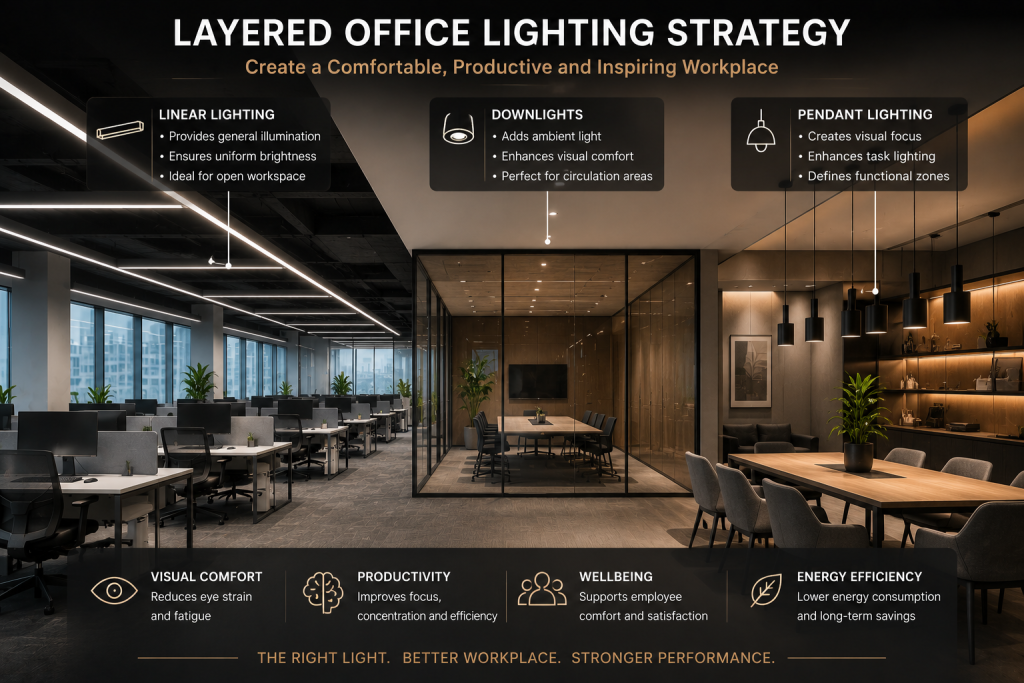
The Best Office Lighting Strategy: Layered Lighting
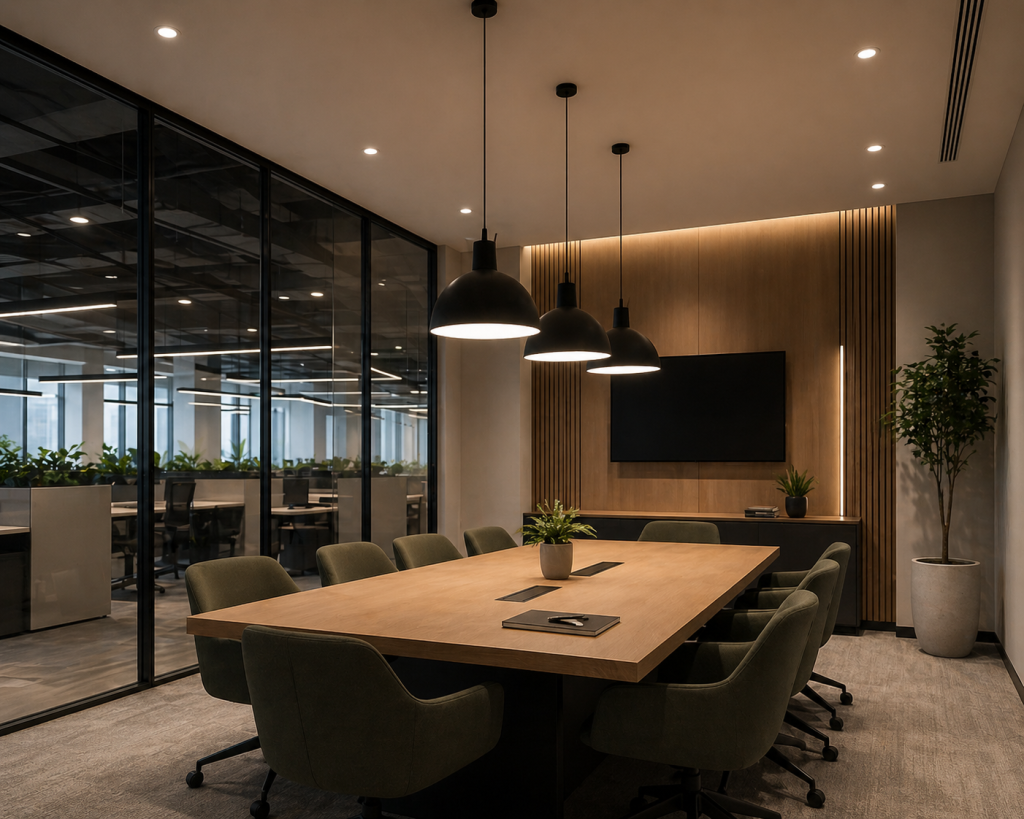
The most successful office lighting projects rarely rely on a single fixture type.
Instead, they combine multiple layers of lighting.
Layer 1: Linear Lighting
Provides primary illumination and workplace consistency.
Layer 2: Downlights
Support ambient lighting and architectural flexibility.
Layer 3: Pendant Lighting
Creates focus and enhances employee experience.
When combined effectively, these systems create:
- Better visual comfort
- Stronger workplace identity
- Improved productivity
- More attractive office environments
Common Office Lighting Mistakes
Mistake 1
Using only one type of lighting fixture.
Mistake 2
Mistake 3
Creating uneven illumination.
Mistake 4
Over-lighting the workspace.
Mistake 5
Treating lighting as decoration rather than a workplace tool.
Why Visual Comfort Matters More Than Brightness
One of the biggest misconceptions in office lighting design is that brighter spaces automatically improve productivity.
In reality, excessive brightness often causes discomfort.
Successful workplace lighting focuses on:
- Visual comfort
- Balanced contrast
- Glare reduction
- Consistent illumination
Comfortable lighting supports long-term employee wellbeing and workplace satisfaction.
Office Lighting Trends in Modern Commercial Projects
Current workplace lighting trends include:
Human-Centric Lighting
Supporting employee wellbeing through better lighting quality.
Flexible Workspace Lighting
Lighting systems that adapt to changing office layouts.
Integrated Architectural Lighting
Combining lighting with interior design.
Energy-Efficient LED Solutions
Reducing operating costs while maintaining performance.
How AXORA Supports Office Lighting Projects
At AXORA Lighting, we provide commercial lighting solutions designed for modern workplaces, offices and commercial developments.
Our focus includes:
- Linear lighting systems
- Commercial downlights
- High visual comfort
- Optical consistency
- Project-oriented supply support
We work with contractors, architects and developers to create scalable office lighting systems that balance performance, aesthetics and long-term reliability.
Conclusion
Modern office lighting is no longer about illumination alone.
It is about creating spaces where people can work comfortably, collaborate effectively and experience a better workplace environment.
The most successful office projects combine:
- Linear lighting
- Downlights
- Pendant systems
Through a layered lighting strategy that prioritizes visual comfort, functionality and architectural integration.
CTA
Looking for Professional Office Lighting Solutions?
AXORA Lighting supports:
✅ Corporate Offices
✅ Workplace Projects
✅ Commercial Buildings
✅ Business Centers
Contact us for:
✔ Product Recommendation
✔ Lighting Consultation
✔ Commercial Quotation