
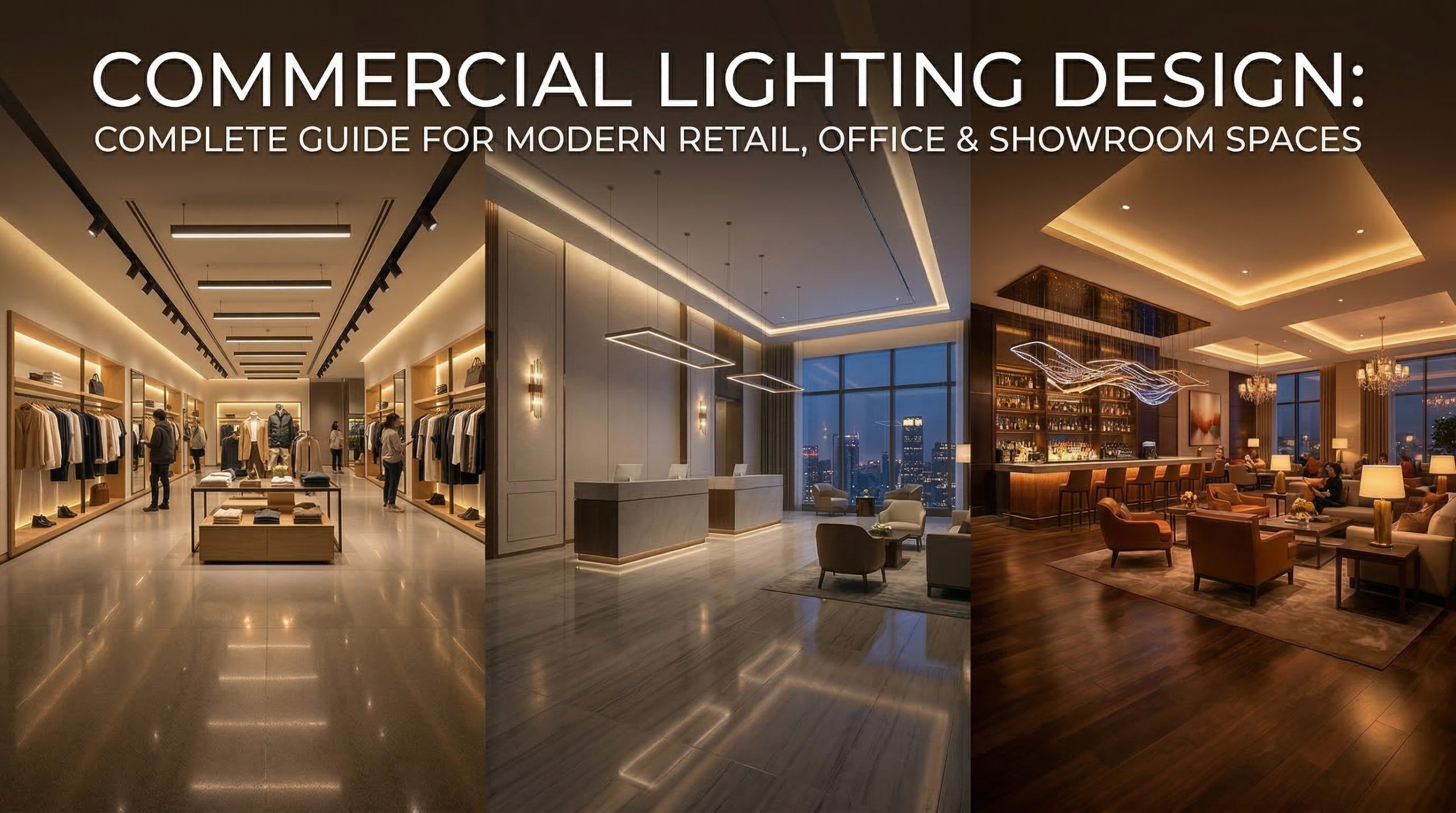
Commercial lighting is no longer just about illumination — it is about experience, branding, and functionality.
The right lighting can:
- Increase customer engagement
- Highlight spaces effectively
- Improve productivity and comfort
- Strengthen brand perception
In this guide, we focus on overall strategies for Retail, Office, and Showroom lighting, showing how to design impactful commercial spaces without diving into specific products.
1.Understanding Commercial Lighting
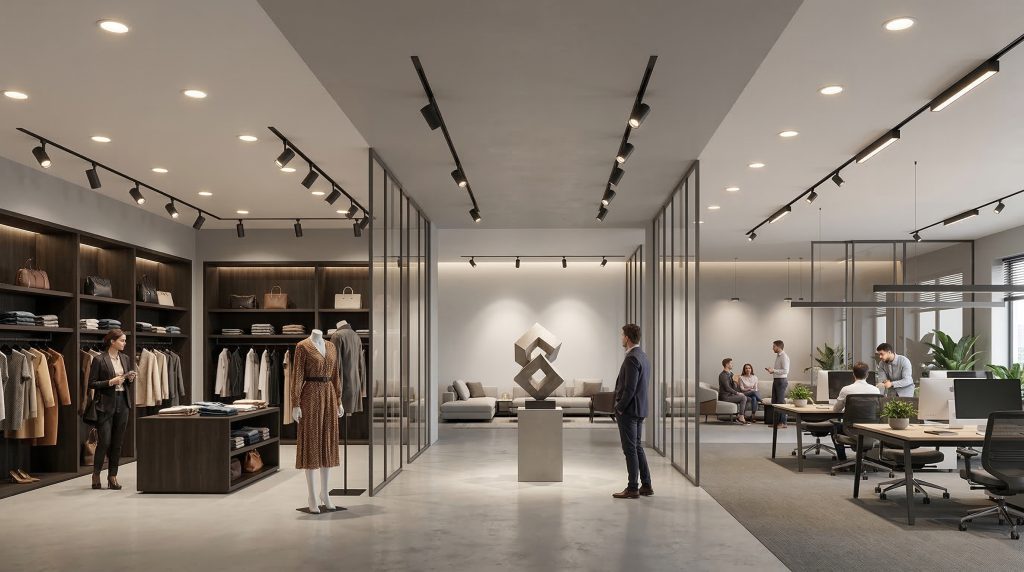
Commercial lighting refers to lighting strategies for business environments, including:
- Retail stores
- Showrooms
- Offices
- Hotels & hospitality spaces
Unlike residential lighting, commercial lighting must balance:
- Functionality and visual guidance
- Energy efficiency
- Visual comfort
- Design aesthetics
Good lighting guides attention, enhances space perception, and supports the business goals of the environment.
2.Retail Lighting Strategy
Retail lighting focuses on customer behavior, sales conversion, and visual merchandising.
Key objectives:
- Attract attention to key products
- Guide customer flow through the store
- Enhance product appeal and brand perception
Lighting Approach:
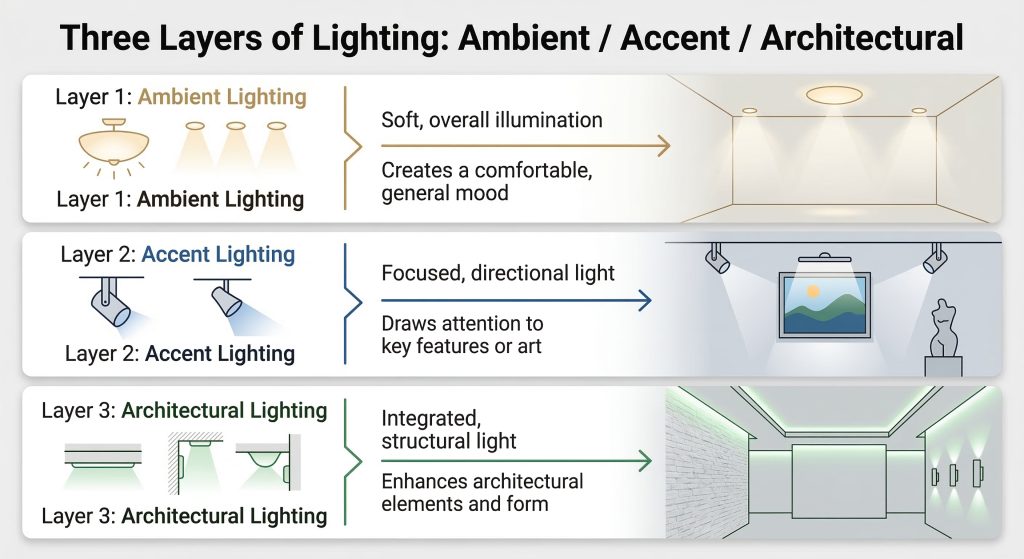
- Ambient Layer: Even overall illumination to ensure customers feel comfortable and safe.
- Accent Layer: Highlight key product zones or displays using adjustable lighting.
- Architectural Layer: Create atmosphere and emphasize store design elements.
Retail spaces benefit from a flexible system that adapts to seasonal promotions or changing layouts.
Learn more about specifications and applications in our
[Best Showroom Lighting Fixtures Guide]
3.Office Lighting Strategy
Office lighting prioritizes productivity, comfort, and energy efficiency.
Key objectives:
- Reduce eye strain and fatigue
- Support different work activities
- Create a professional and cohesive environment
Lighting Approach:
- Ambient Layer: Even general lighting to maintain consistent brightness.
- Task Layer: Adjustable lighting for desks, meeting rooms, and collaboration zones.
- Architectural Layer: Subtle accent lighting to enhance the design and maintain focus.
A layered lighting strategy ensures employees are comfortable, alert, and able to focus on their tasks.
Explore detailed fixture comparisons in
[Best Showroom Lighting Fixtures Guide]
4.Showroom Lighting Strategy
Showroom lighting focuses on highlighting products and creating an immersive experience.
Key objectives:
- Showcase products with clarity and color accuracy
- Provide flexible solutions for changing displays
- Enhance the brand’s premium feel
Lighting Approach:
- Ambient Layer: Overall brightness without harsh shadows
- Accent Layer: Emphasize key collections or displays
- Architectural Layer: Enhance the space’s design and create visual interest
Showrooms benefit from modular and adaptable lighting solutions that allow quick updates and maintain a fresh appearance for visitors.
See how these systems compare in
[Best Showroom Lighting Fixtures Guide]
5.Core Principles Across All Commercial Spaces
While Retail, Office, and Showroom spaces have unique goals, all effective commercial lighting follows these principles:
- Layered Lighting Strategy – Combine ambient, accent, and architectural layers.
- Visual Comfort – Avoid glare and maintain consistent brightness.
- Flexibility – Enable future adaptation for changing layouts or seasonal needs.
- Brand Alignment – Ensure the lighting reflects the brand identity and enhances the desired experience.
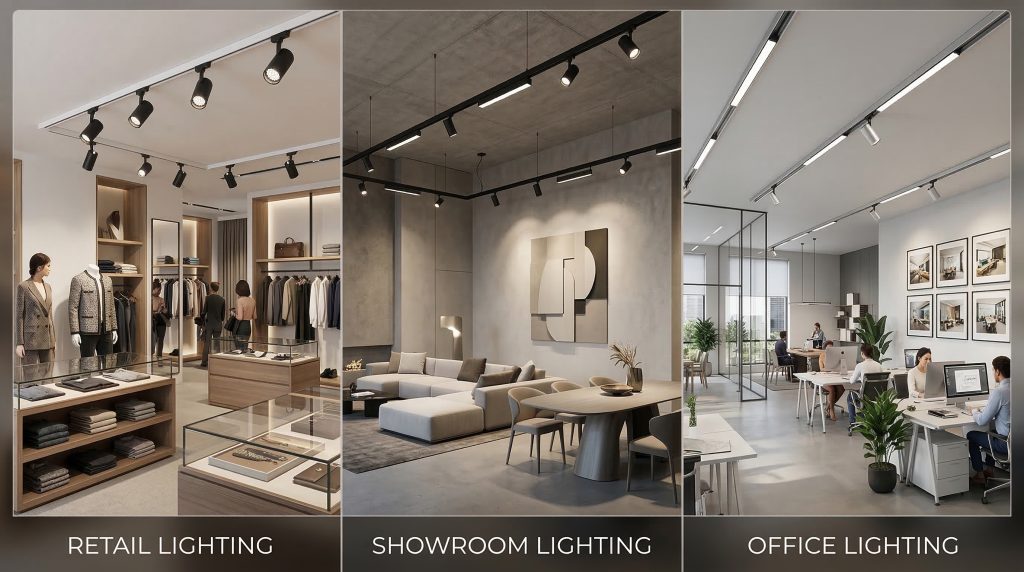
6.Commercial Lighting Applications
Different commercial spaces require different lighting strategies.
Showroom Lighting
Showrooms require high flexibility and strong product focus.
Lighting must:
- Highlight key products
- Adapt to changing displays
- Create a premium experience
Read the full guide:
[Showroom Lighting Design]
See how these systems compare in:
[Showroom Lighting Fixtures]
Retail Store Lighting
Retail lighting focuses on customer behavior and sales conversion.
Key goals include:
- Attracting attention
- Guiding customer flow
- Enhancing product appeal
Track lighting and accent lighting play a major role in retail environments.
Office Lighting
Office lighting prioritizes:
- Visual comfort
- Productivity
- Energy efficiency
Downlights and linear lighting are commonly used to create a clean and professional workspace.
5.Real Project Case Studies
Real-world applications demonstrate how theory translates into results.
Explore our detailed project:
[Showroom Lighting Case Study]
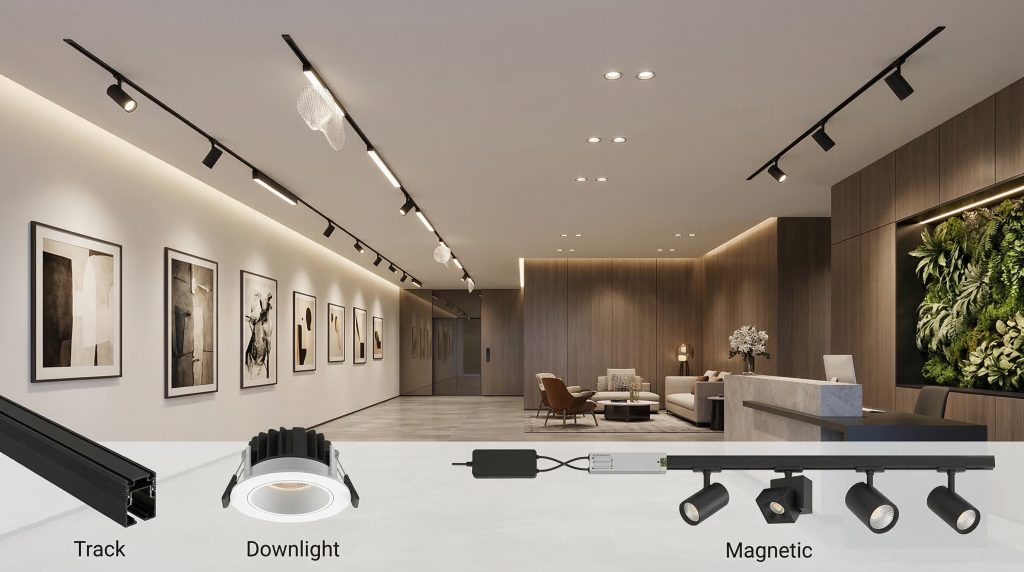
This case highlights how combining track lighting, downlights, and magnetic systems can:
- Improve product visibility
- Enhance customer experience
- Create a modern commercial environment
6.How to Choose the Right Commercial Lighting
When selecting lighting solutions, consider:
- Ceiling height
- Space layout
- Product type
- Desired atmosphere
- Flexibility requirements
Choosing the right combination of fixtures ensures both performance and long-term adaptability.
7.Why Work with a Professional Lighting Supplier
A professional supplier provides more than just products:
- Lighting design support
- Customized solutions
- Energy-efficient systems
- Reliable quality and certifications
For commercial projects, this can significantly impact both project success and cost efficiency.
Final Thoughts.
Commercial lighting design is about strategy, space, and experience.
By understanding the specific goals of Retail, Office, and Showroom environments, businesses can create spaces that are functional, engaging, and aligned with brand identity.
Ready to enhance your commercial space with expert lighting design?