LED Track Light vs Downlight: Which is Better for Commercial Projects?
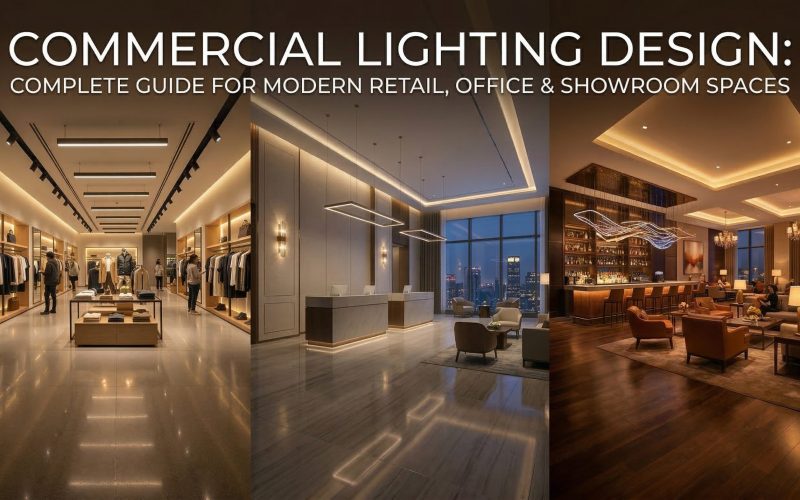
Choosing the right lighting system is one of the most important decisions in commercial lighting design.
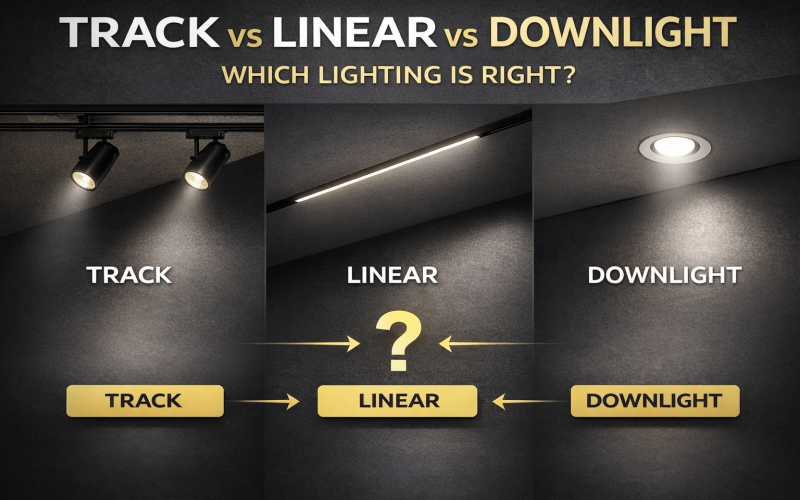
Two of the most commonly used solutions are LED track lights and recessed downlights.
But they are not interchangeable — each serves a different role.
Understanding the difference helps you create better lighting layouts and improve project results.
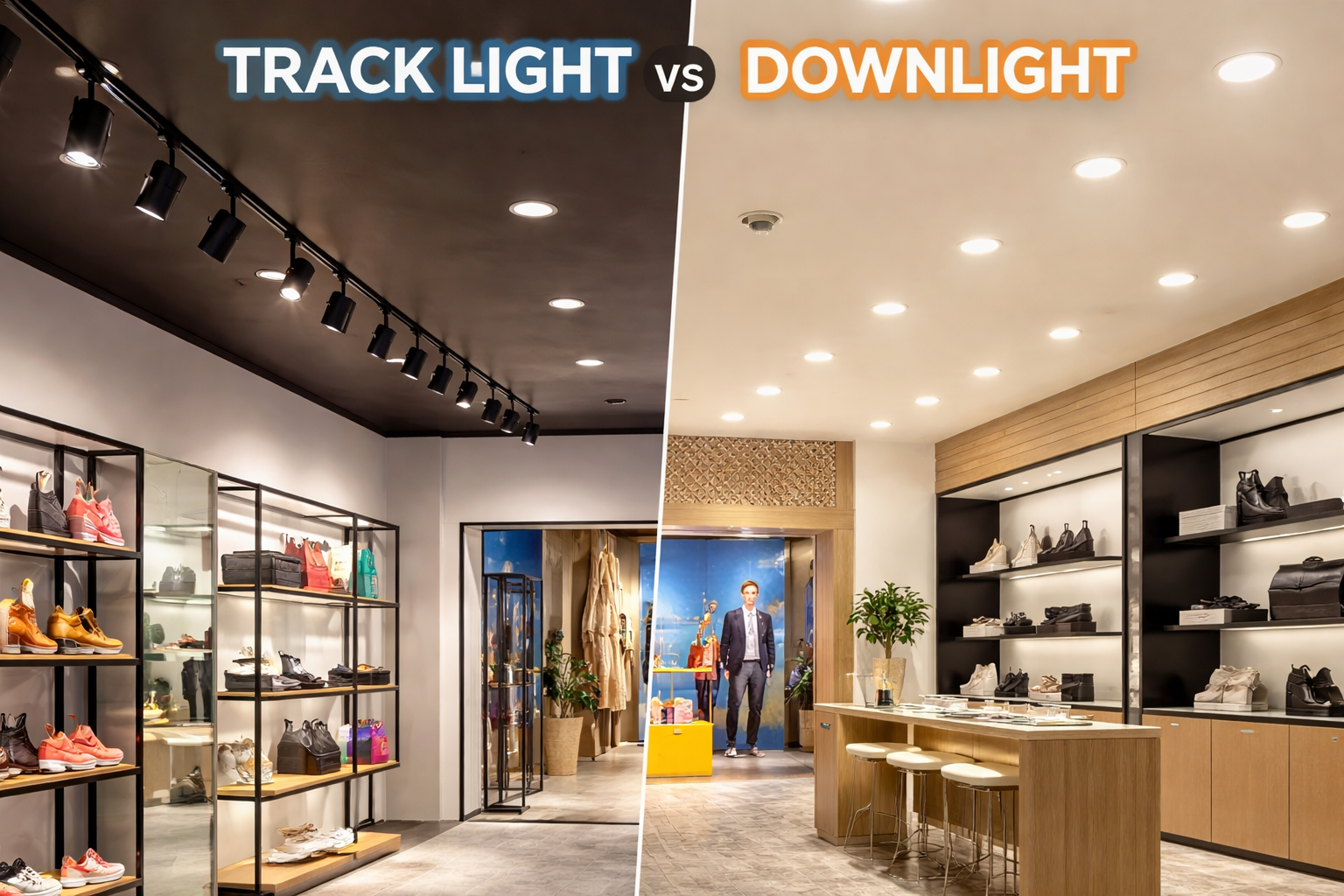
Key Differences Between Track Lights and Downlights
| Feature | Track Light | Downlight |
|---|---|---|
| Flexibility | Adjustable | Fixed |
| Lighting Type | Accent lighting | General lighting |
| Application | Retail / showroom | Office / mall |
| Visual Effect | Strong focus | Uniform lighting |
When to Use Track Lighting
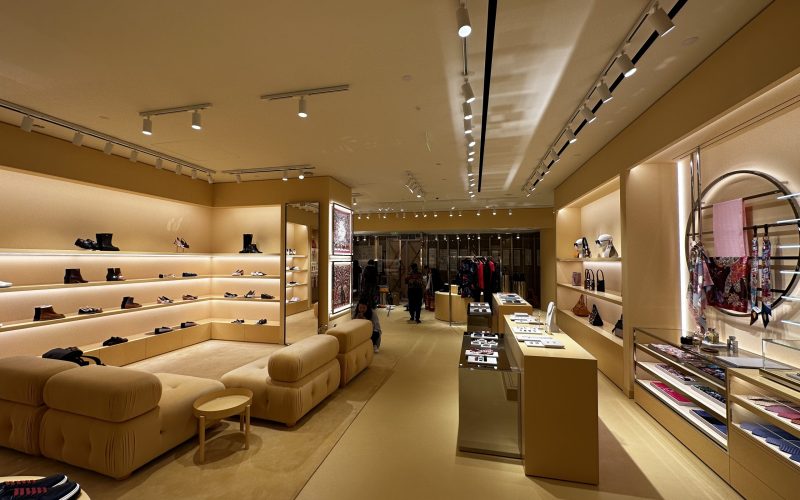
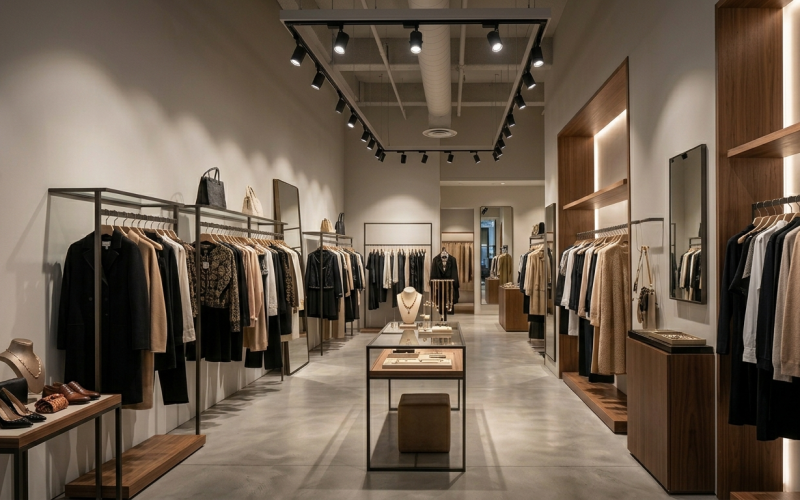
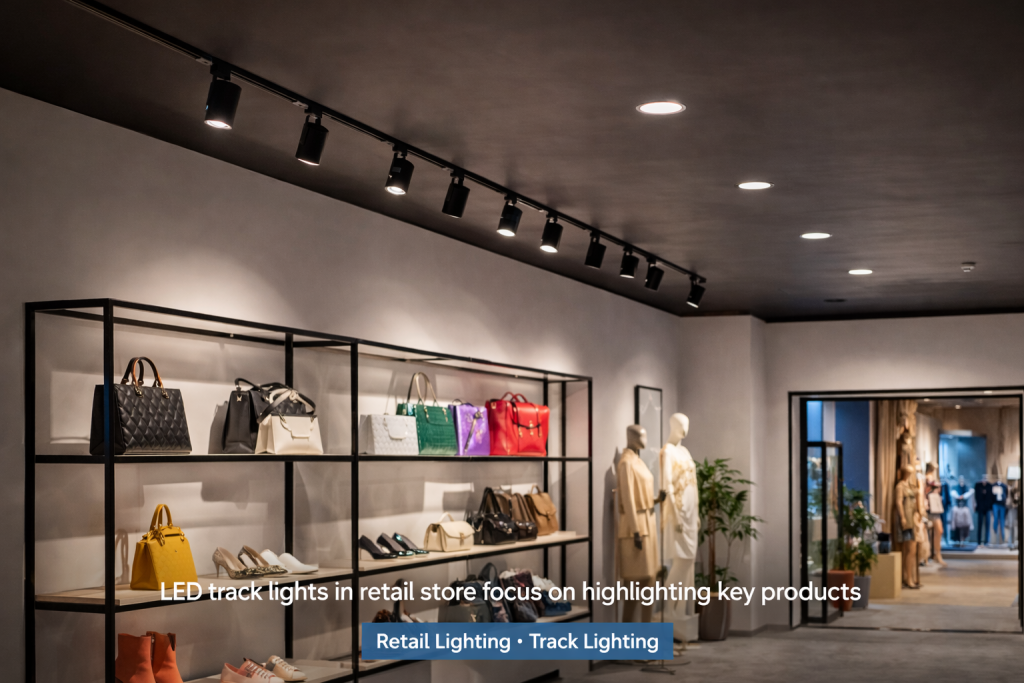
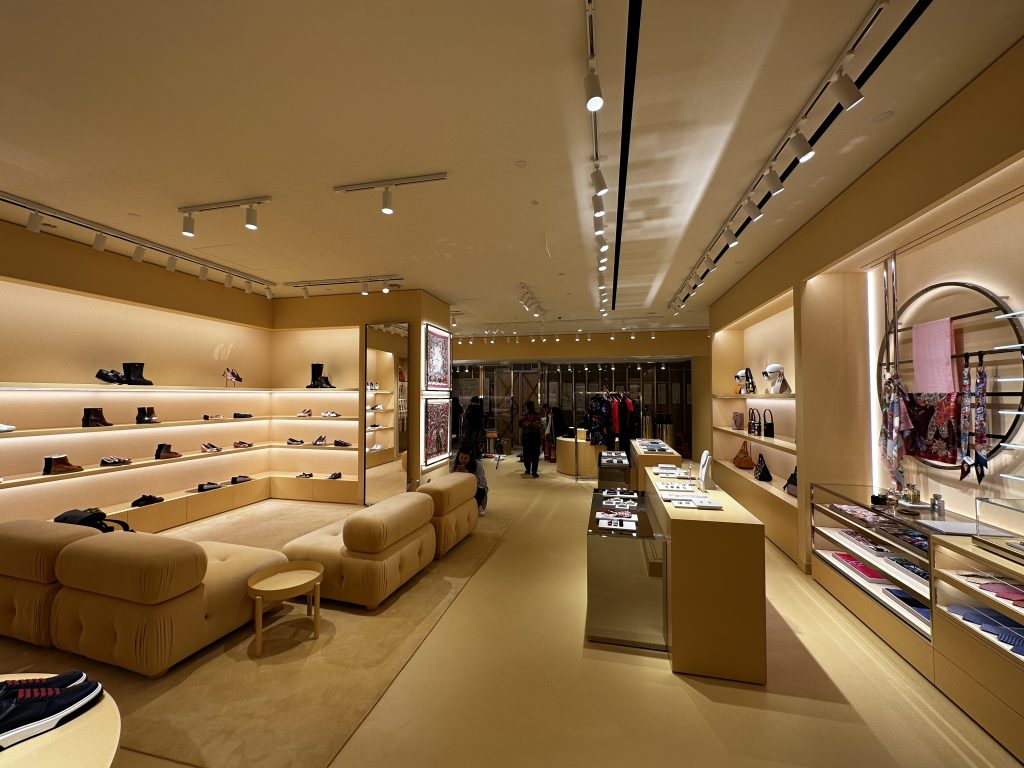
Track lighting is ideal for spaces where visual focus and product presentation matter.
Typical applications:
- Retail stores
- Showrooms
- Brand boutiques
In retail lighting applications, LED track lights are widely used to highlight key products and guide customer attention.
When to Use Downlights
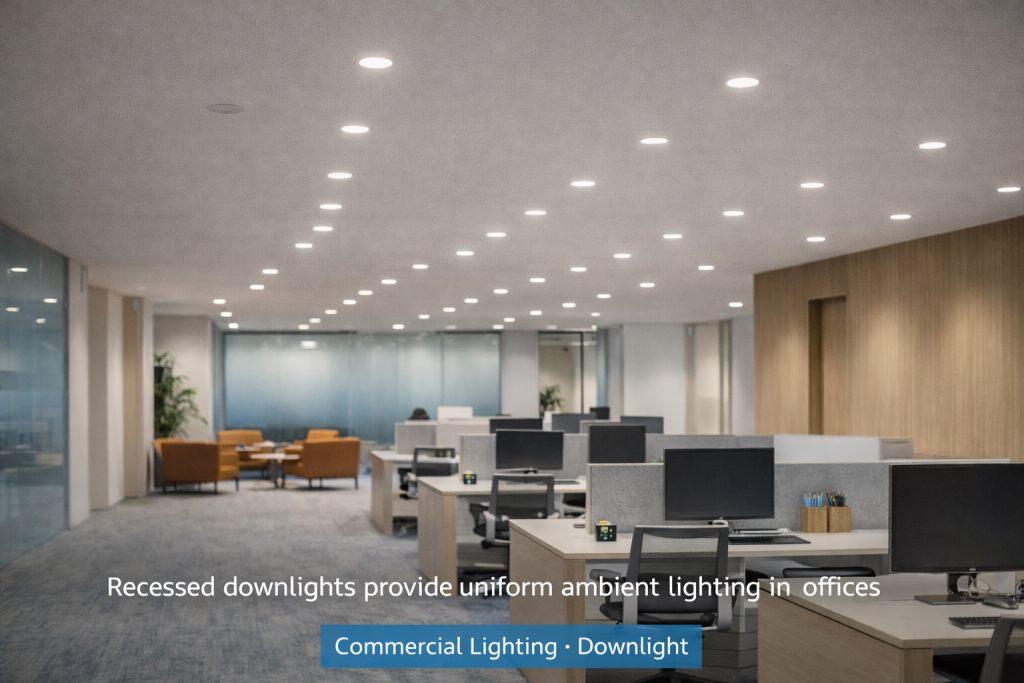
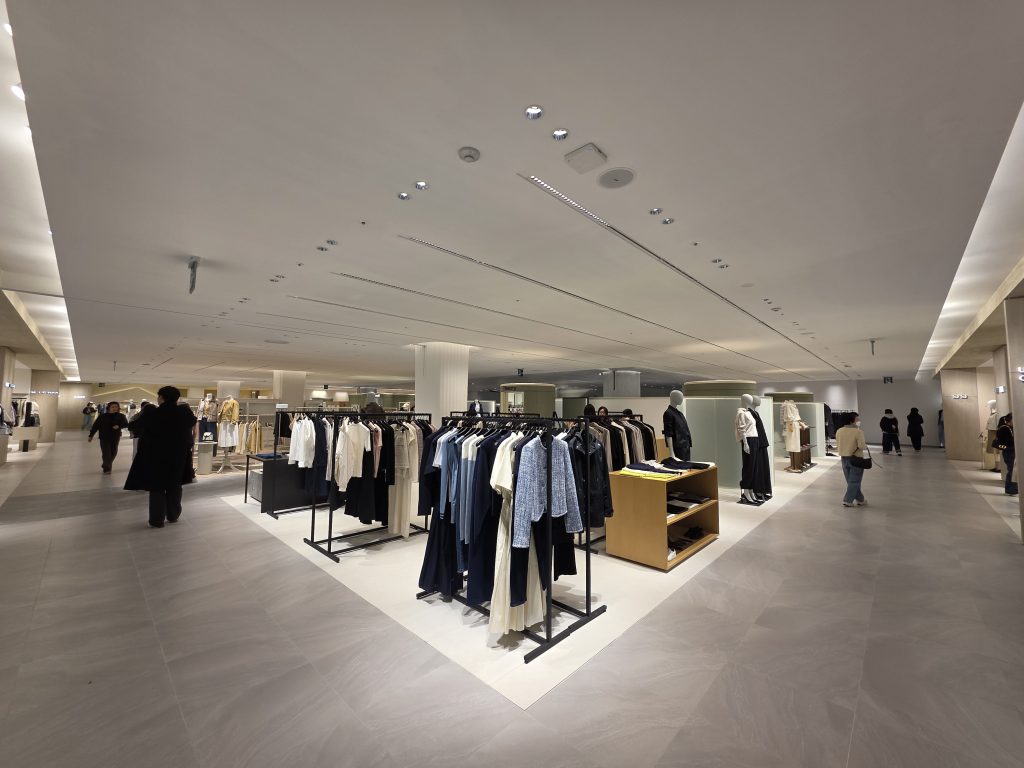
Downlights are designed for general illumination and clean ceiling integration.
Typical applications:
- Offices
- Shopping malls
- Public spaces
Best Solution: Combine Track Lights and Downlights
In most commercial projects, the best approach is not choosing one — but combining both.
Why this works:
- Downlights provide base illumination
- Track lights create focal points
- Together they build lighting layers
Common Mistakes in Commercial Lighting
❌ Using only one type of lighting
❌ Ignoring beam angles
❌ Poor lighting layout
❌ No lighting hierarchy
Why Choosing the Right Lighting Supplier Matters
Lighting products alone are not enough for commercial projects.
You need:
- Stable supply capability
- Consistent quality
- Technical support
- Project coordination