

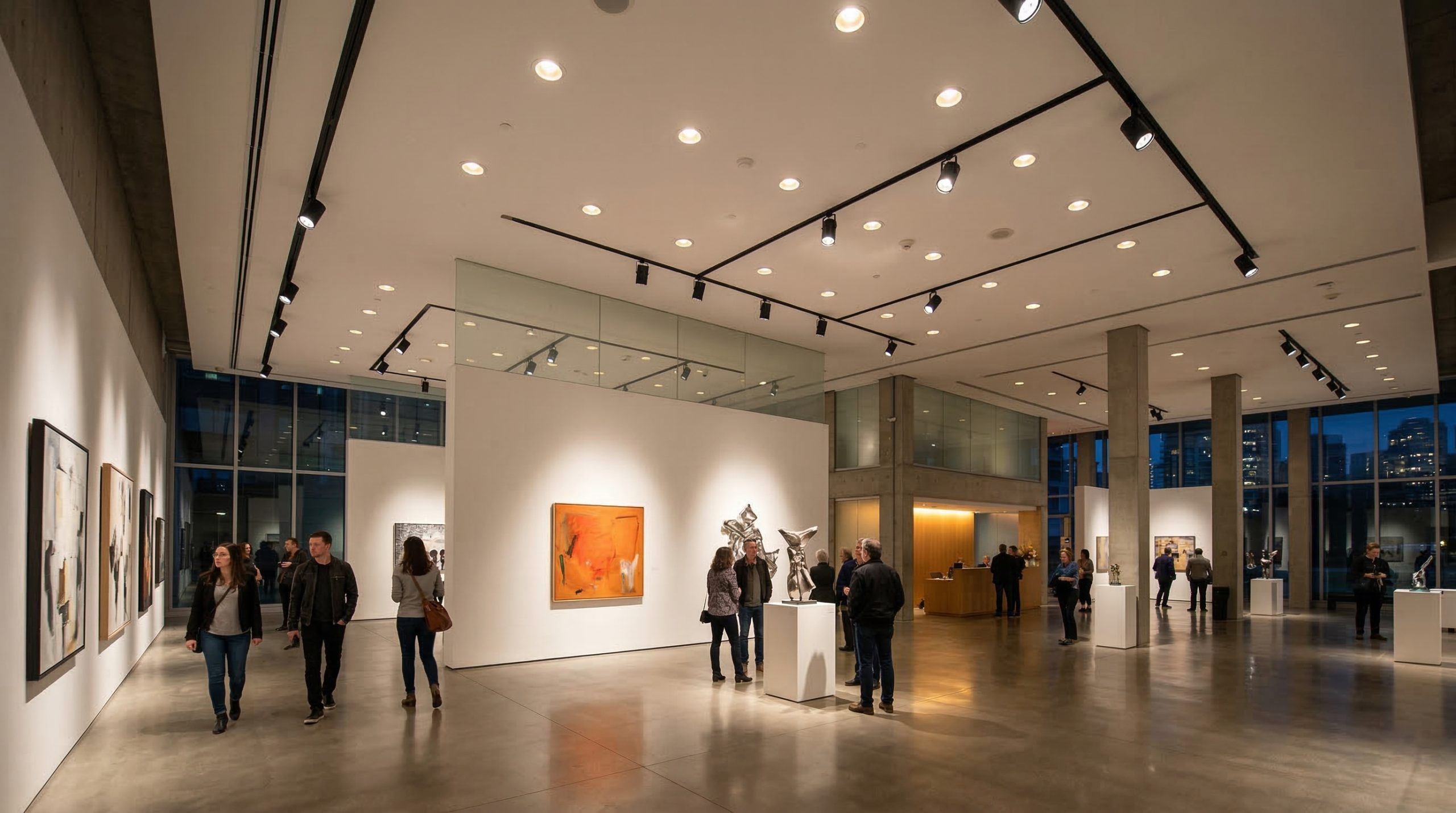
Creating an engaging showroom is not just about installing lights — it’s about strategically shaping space, guiding attention, and highlighting key products.
The right lighting layout can:
- Make products visually pop
- Enhance customer perception of your brand
- Encourage visitors to explore and stay longer
This guide focuses on lighting methods and design principles to help you build effective showroom environments using track lights, downlights, and magnetic systems.
1.Understanding Showroom Lighting Layouts

A well-planned showroom lighting layout balances ambient, accent, and architectural lighting:
- Ambient Lighting – Provides overall brightness, ensuring the space feels open and inviting.
- Accent Lighting – Highlights key products or displays, drawing customer attention.
- Architectural/Decorative Lighting – Adds depth, emphasizes structure, and enhances the visual experience.
Key Method: Start by mapping your showroom zones and determine where ambient, accent, and decorative layers are needed.
Learn more about fixture options in our guide: [Best Lighting Fixtures for Showrooms]
2.Using Beam Angles to Highlight Products
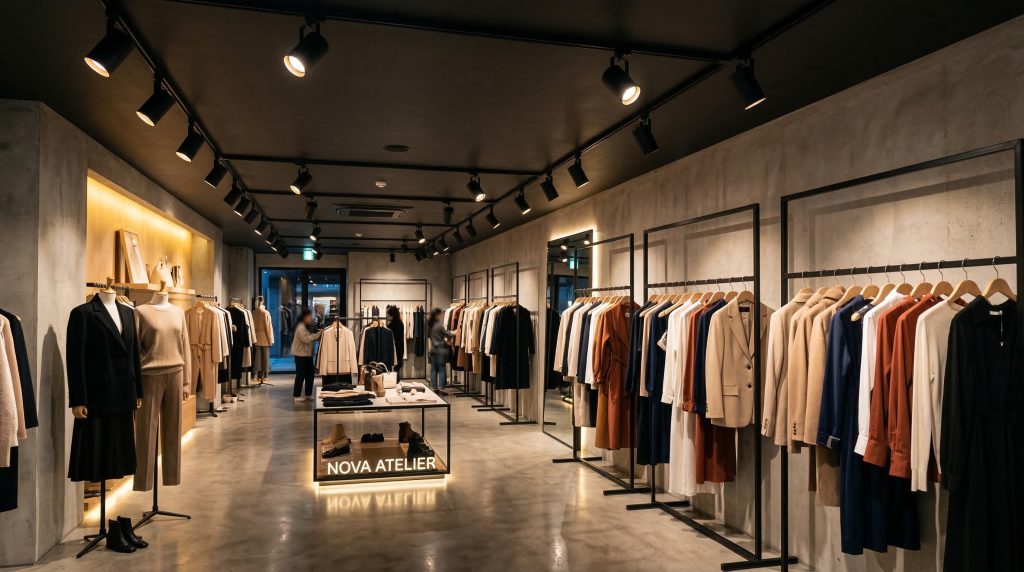
Beam angle selection is critical for how products appear under light:
- Narrow Beams (15°–30°) – Focused accent for individual products or mannequins
- Medium Beams (30°–60°) – Ideal for shelves, display walls, and groupings
- Wide Beams (>60°) – Soft ambient coverage or general illumination
Tip: Combining multiple beam angles in a layered layout ensures products are clearly highlighted without overexposure or glare.
3.Designing with Layered Lighting
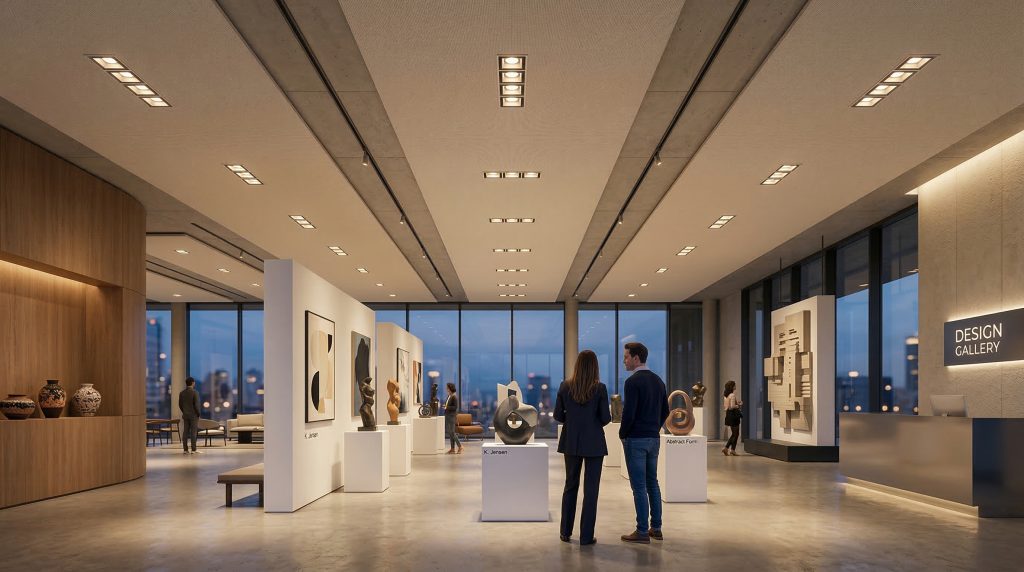
A layered approach ensures both comfort and focus:
- Ambient Layer (Downlights) – Even illumination across the showroom
- Accent Layer (Track or Spotlights) – Draw attention to featured products
- Architectural Layer (Magnetic or Linear Fixtures) – Add visual interest and emphasize spatial flow
Example: Use recessed downlights for general coverage, track lights for product zones, and magnetic systems to highlight seasonal or promotional displays.
4.Common Showroom Lighting Mistakes
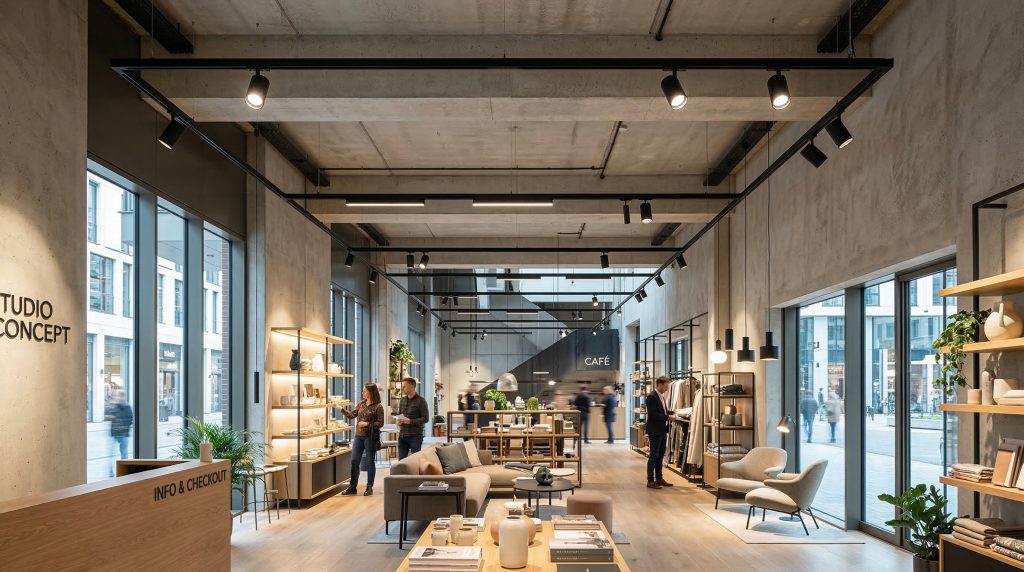
Avoid these pitfalls to ensure your design performs as intended:
- Incorrect Beam Angle – Too narrow or too wide can flatten displays or create glare
- Poor Layering – Missing accent or ambient layers leads to dull or uncomfortable spaces
- Key Products Not Highlighted – Main collections should always have dedicated focus lighting
- Overuse of Accent Lights – Too many spotlights create visual noise instead of guiding attention
By understanding these mistakes, you can plan more effective, visitor-friendly layouts.
5.Practical Layout Tips
Position accent lights along customer sightlines for maximum impact
Combine different fixture heights to add depth and avoid monotony
Use adjustable track or magnetic systems to maintain flexibility for seasonal updates
Test your layout with a sample product display to ensure correct color rendering and brightness
6.Next Steps: Choose the Right Fixtures
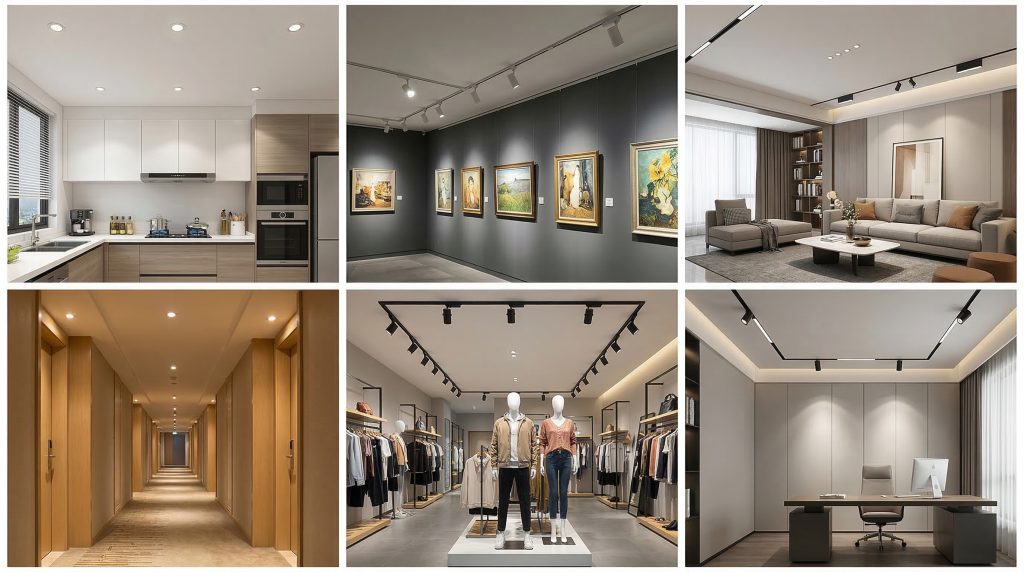
After designing your showroom lighting layout, it’s time to select fixtures that match your strategy.
See our [Top Showroom Lighting Fixtures for Track, Downlight & Magnetic Systems] to pick the best products for your space.
See how these principles work in real projects:
[Modern Fashion Showroom Lighting Case Study]
Final Thoughts
Lighting dramatically affects how customers perceive products.
By combining track lights, downlights, and magnetic systems, designers can create flexible, visually engaging showrooms.
As showroom layouts evolve, adaptable lighting solutions become even more important.
For a complete commercial lighting guide, visit our:
[Commercial Lighting Design Guide]
Request Your Custom Showroom Lighting Solution
Explore Product Recommendations: [View Lighting Fixtures]